
Federal Prison Release Paths
The Federal Bureau of Prisons holds people serving federal sentences. It is not the custodian for every federal defendant. Before sentencing, the U.S. Marshals Service often controls detention and transport, sometimes through a local contract bed. A person can therefore disappear from Woodford County Detention Center, remain in federal custody, and not yet appear as a sentenced BOP inmate.
After a federal prison term, the BOP locator may display “Released” with a date. Community supervision may still follow through the federal court and probation system. A transfer to immigration, state, local, or another authority can also follow the end of BOP custody. The federal release record answers only the BOP episode, so the destination and docket remain important.
Search BOP Release Records
Use the BOP Inmate Locator for sentenced federal custody and many former federal inmates. Identifier searches are best when a BOP register, DCDC, FBI, or INS number is known. A name search can use first, middle, and last name with identifying details. BOP explains that its historical locator coverage generally begins in 1982 and that some people may fall outside the database.
- Choose an identifier search when a federal register number is available.
- Otherwise search the full name and compare all displayed identifying fields.
- Read the institution, status, and release date exactly as shown.
- Record the check date and avoid merging people with similar names.
- Compare the result with the federal docket and the Woodford movement record.
- Request a BOP record if the public line cannot answer the release question.
“Released” supports the end of BOP confinement for that record. “Not in BOP custody” is less specific. It can reflect pretrial USMS control, state or local custody, immigration custody, release, or a record beyond locator coverage.
BOP Status Language Matters
A locator result should be reported as a narrow agency fact. The phrase shown is not a claim about unrestricted presence in the community. Federal supervised release, which is court-ordered monitoring after imprisonment, can follow. A new state or local case can create another custody episode. Immigration authorities can receive a person after the criminal sentence.
| BOP result | Supported reading | Next check |
|---|---|---|
| Named institution | BOP assignment or custody shown | Institution and docket |
| Released with date | BOP confinement ended on the displayed date | Docket and supervision record |
| Not in BOP custody | BOP does not show current custody | USMS, court, local, state, or ICE source |
| No match | No located record under those inputs | Retry identifiers and verify jurisdiction |
A court judgment can show sentence length and supervised-release terms, yet arithmetic from the judgment is not proof of actual departure. Credits, amended orders, later sentences, and agency calculations can affect dates. Use the locator date and official records.
Woodford Federal Transfer Evidence
Woodford budget materials contain federal-prisoner revenue lines. They show that federal detention is relevant to the county jail, but they do not identify which federal agency held a named person or prove a current contract. Ask Woodford for the release or movement transaction. The receiving-agency field and federal case number determine the next source.
If the record names USMS, review the Eastern District of Kentucky docket and contact the relevant Marshals district channel. If it names BOP or provides a register number, use the BOP locator. If ICE is the receiver, switch to the adult ICE locator. A “transfer” entry means custody continued. The Woodford jail release route explains how to request that local destination field.
Note: A county budget category is system-level context and must never be treated as evidence about a named person's custody.
Federal Court Release Record
PACER and the Eastern District of Kentucky docket can preserve detention orders, bond conditions, judgment, sentence, commitment, and supervised-release terms. Those entries explain legal authority. They do not always show the exact time a person physically left a jail or prison.
A pretrial release order may require processing before departure and may be blocked by another hold. A judgment may commit the person to BOP after time in a local contract bed. A later docket entry can modify conditions or address a violation. Match the federal case number from the jail or court to avoid confusing defendants. If the docket and locator seem inconsistent, ask the responsible agency for the custody or movement record rather than guessing from dates.
- USMS custody
- Federal pretrial, transport, and court-related detention authority.
- BOP custody
- Federal prison responsibility, usually after sentence and designation.
- Supervised release
- Court-ordered monitoring after imprisonment, distinct from BOP confinement.
- Transfer
- Movement to another custodian without community release.
BOP Records And Contact
For formal federal prison records, use the BOP Freedom of Information Act channel. Identify the person with the register number, full name, date range, institution if known, and the exact record sought. A request can ask for an existing release record, release date, institution history, or movement information, subject to federal privacy law and exemptions.
Third-party details may require consent or proof of death when they are not public locator facts. Ask for segregable public portions if part of a record is withheld. BOP is the right custodian for BOP records, not for a Woodford booking sheet, a USMS pretrial movement, or an ICE detention event. Route each request to the agency that created it.
Federal Bureau of PrisonsNationwide federal prison system
No institution identified in Woodford County
Use the official locator and FOIA pages for current routing.
BOP Release Image Source
The official BOP locator screen shows the federal search channel used after a Woodford-related case enters sentenced federal custody.
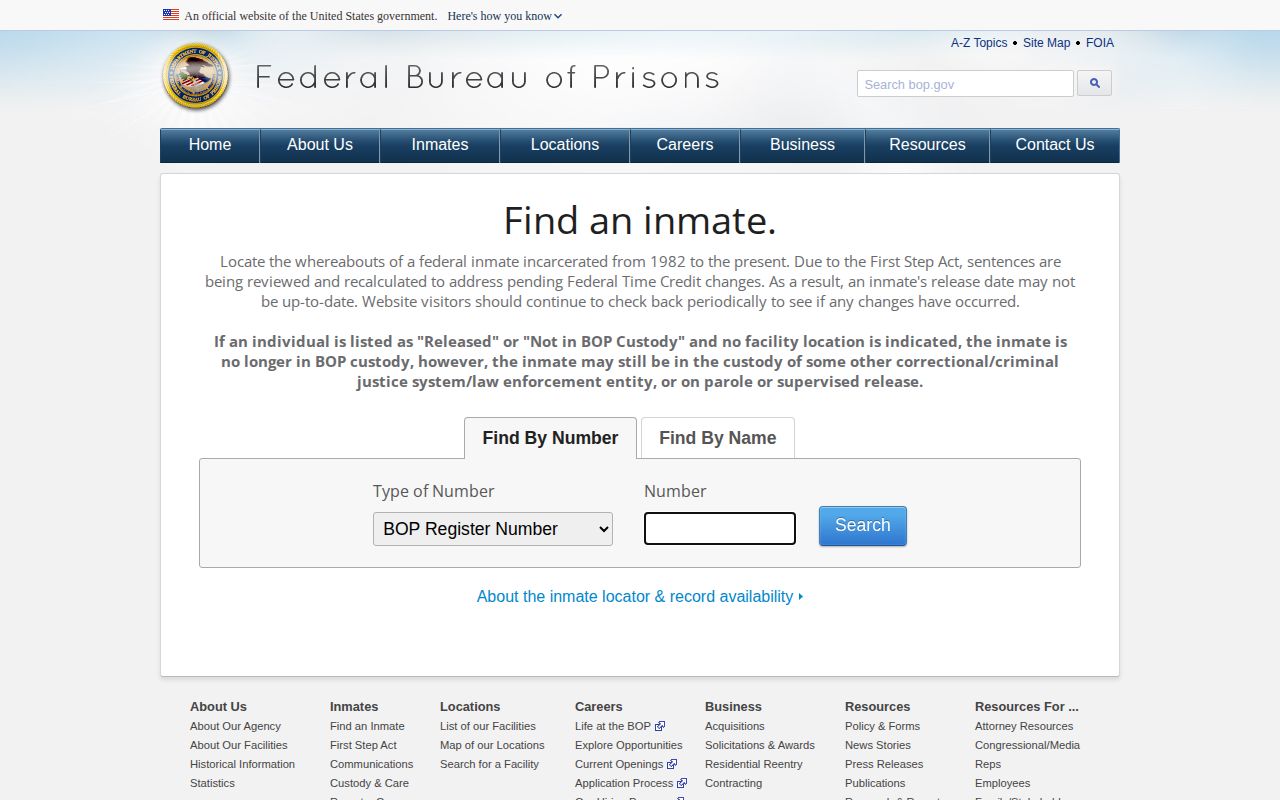
The image illustrates the locator entry point, not a Woodford facility. Search results still need identity matching and comparison with the federal docket.
Federal Release Evidence Chain
A complete federal check follows custody from the local exit to the later federal result. First obtain Woodford's movement destination. Next locate the federal case and determine whether custody is pretrial, sentenced, or complete. Then use the agency-specific source.
| Question | Primary source | Limit |
|---|---|---|
| Where did Woodford send the person? | Jail movement transaction | May require a request |
| What did the federal court order? | PACER or court record | Not always physical checkout time |
| Was the person in federal prison? | BOP locator | Not all federal custody is BOP custody |
| When did BOP confinement end? | Released locator result or BOP record | Later supervision or other custody may remain |
Preserve identifiers and exact agency terms throughout. That approach prevents a county transfer from becoming a false release claim and prevents “not in BOP custody” from being stretched beyond what the federal source actually says.
BOP Released Result Verification
When the locator gives a release date, preserve the register number, exact status, and date before drawing a broader conclusion. The BOP source itself warns that a person listed as released or not in BOP custody may still be in another correctional system or under parole or supervised release. Review the federal docket for the judgment and the term of supervised release. Look for a later revocation, new detention order, or transfer that changes the current picture. If Woodford County was part of the route, compare the BOP record with the local booking and movement dates rather than assuming both systems describe the same custody episode.
A release date can also appear inconsistent with a sentence calculated from the judgment. Do not repair that gap with independent arithmetic. Federal time credit, sentence recalculation, amended judgments, and other agency actions can affect the date maintained by BOP. Request the relevant BOP release or sentence-computation record when the public line is not enough. If the locator says only “Not in BOP custody,” inspect USMS pretrial custody, Kentucky or local custody, and ICE as the case facts support. A federal defendant who has not yet reached a designated prison may have no useful BOP location despite remaining confined. This layered review keeps the result tied to the responsible custodian and distinguishes an actual BOP release from a database boundary.